Jump to a section
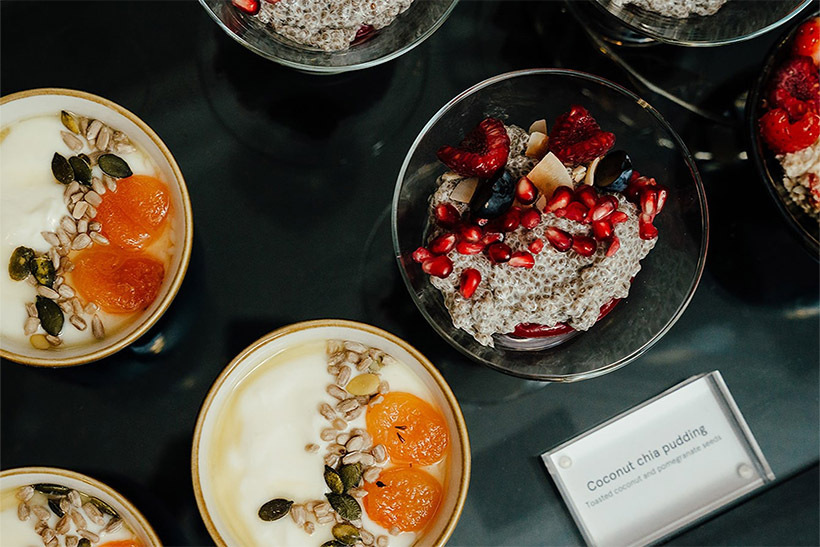
It's 2.30pm on the first day of a corporate retreat. Everyone's enjoyed a lovely lunch, the coffee's flowing and the afternoon workshop is about to begin. But as the presentation gets underway, a few people are struggling to concentrate. Sound familiar?
It's easy to blame a big lunch for the afternoon slump, but research suggests there's more going on. Our natural body clock can cause a dip in alertness during the early afternoon, even when we haven't eaten. What we eat, how much we eat and what we do afterwards can all play a part.
When planning a corporate retreat, much of the attention goes into the venue, agenda, meeting spaces and team-building activities. Food and drink are often treated as an afterthought, with decisions largely driven by menus, budgets and dietary requirements.
Yet over the course of a two-day retreat, delegates are likely to eat six or more meals and snacks, drink several cups of coffee, enjoy a few glasses of wine and spend much of their time sitting in meetings. Each of these choices has the potential to influence how people feel, concentrate and participate.
So, how can organisers make better use of food, drink and downtime to help everyone get the most from their time together?
We've looked at the science behind some standard practice, from the traditional cooked breakfast and afternoon sugar fix to evening drinks and a good night's sleep, with practical advice on how to plan catering, breaks and downtime around the people attending.
1. Breakfast: Getting The Day Off To A Good Start
Few things say 'country house stay' quite like a traditional full English breakfast. And for many guests, it's something to look forward to. But when the morning involves several hours of meetings, presentations or workshops, it helps to think about how breakfast choices can affect the day ahead.
The temptation at a hotel breakfast buffet is often to have a bit of everything, simply because it's there. A 2021 analysis of 30 studies found that people tended to eat more when offered a greater variety of foods. Anyone who's watched The Traitors will know that breakfast in a castle can be quite an event. Thankfully, at a corporate retreat, the biggest dilemma is usually whether to go back for another croissant, but all that choice often leads delegates to eat more at breakfast than they typically would. That can be a problem when they're expected to sit and concentrate for long periods of time after breakfast.
There's some interesting science behind what we choose to eat, too. A 2022 analysis of 15 studies found that breakfasts expected to have a smaller impact on blood sugar were associated with a modest improvement in certain memory tasks more than two hours after eating. That could make a big difference when the morning agenda is back-to-back presentations or another 'legendary' three-hour speech from the CEO.
If you're wondering what a good breakfast looks like before a busy day of workshops, here's a rundown of our top buffet options:
- Porridge or overnight oats: oats with peanut butter, milk and berries for slow-release energy and fibre.
- Greek yoghurt bowls: plain Greek yoghurt topped with chia seeds, granola and nuts for protein that helps keep hunger at bay.
- Avocado and salmon toast: wholegrain or rye bread with mashed avocado and smoked salmon for protein and omega-3 fats.
- Egg and spinach scramble: eggs scrambled with spinach and tomatoes for a good hit of protein.
- Protein-packed smoothies: blended spinach, banana, protein powder and flax seeds for a light, easily digestible option.
Even the traditional cooked breakfast offers plenty of choice, with eggs, tomatoes and mushrooms alongside the bacon and sausages. If you want to avoid a mid-morning energy dip, go easy on pastries, sugary cereals and white toast.
If you're planning an event, the key is to make sure there's a good selection of lighter, balanced options alongside the more indulgent choices. Allowing delegates to choose their own portion sizes, rather than serving everyone an enormous plated breakfast, is a simple solution.
And don't forget the schedule. Giving everyone enough time to enjoy breakfast without rushing straight into the first meeting is a good way to start what might be a demanding day.
2. Coffee: A Helpful Boost Or Too Much Of A Good Thing?
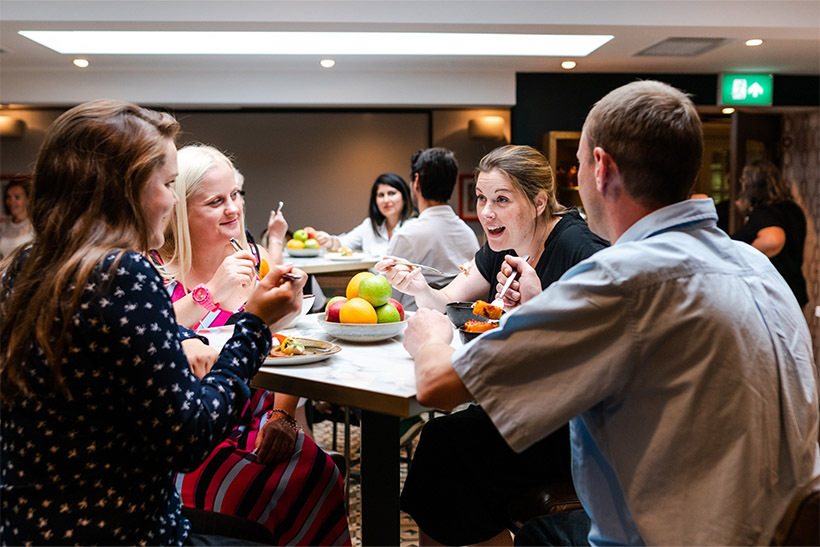
For many people, the working day doesn't properly begin until they've had their first coffee. And at corporate events, where early starts and packed agendas are common, a good coffee station is practically essential.
The good news for coffee lovers is that there's plenty of science supporting its benefits. A 2025 review of 31 clinical trials involving more than 1,400 people found that caffeine improved attention, helping participants respond both more quickly and more accurately. The researchers also found that increasing the dose didn't necessarily lead to better results, particularly when it came to accuracy.
But there's a catch, especially for residential retreats. Caffeine can remain active in the body for several hours, potentially affecting sleep long after the last cup. One clinical trial found that a high dose of caffeine (400mg) disrupted sleep even when consumed 12 hours before bedtime. A much smaller dose of 100mg did not produce the same measurable disruption in that study.
For event organisers, this makes the timing of refreshment breaks strategic, particularly on retreats lasting more than one day. Coffee can be a welcome addition to a demanding morning programme, but relying on repeated caffeine boosts to carry delegates through a packed afternoon may not be the best approach.
Make good-quality coffee available, but ensure decaffeinated coffee, herbal teas and other alternatives are just as easy to find, particularly later in the day. It's a small detail, but one that gives everyone greater control over their caffeine intake without having to ask for something different.
And if you find delegates reaching for their fourth coffee just to get through another presentation, it might be time to look at the agenda rather than the coffee machine.
3. The Sugar Rush: Myth Or Fact?
We've all been there. It's 11am, concentration is starting to wander, and the arrival of coffee and biscuits couldn't be better timed. Perhaps there's even a selection of cakes and pastries to tempt you. Surely a little sugar is just what everyone needs to get through the next session? After all, Mary Poppins said so…
Interestingly, the science suggests otherwise.
A 2019 review of 31 studies involving more than 1,200 participants found no evidence that consuming carbohydrates improved people's mood. In fact, participants who consumed carbohydrates reported greater fatigue and lower alertness within the first hour compared with those given a placebo. The researchers concluded that the familiar idea of a 'sugar rush' isn't supported by the evidence.
The good news is that there are plenty of appealing alternatives. Fresh fruit with natural yoghurt, mixed nuts, wholegrain crackers or oatcakes, and crudités with hummus or mini cheeses all provide a useful combination of nutrients, including protein and fibre, which can help keep focus up and hunger at bay between meals.
There's research supporting some of these choices, too. A 2021 clinical trial involving 100 participants found that eating almonds as a mid-morning snack produced a significantly smaller rise in blood sugar than eating an equivalent amount of energy from sweet biscuits.
Ahead of your next event, discuss refreshment breaks with the venue rather than simply accepting the standard tea, coffee and biscuits package. A selection of nutritious snacks alongside the usual treats gives delegates more choice, particularly when there's a long afternoon of meetings ahead.
If energy is flagging by mid-morning, get everyone on their feet for some fresh air and a short walk rather than laying out another tray of biscuits.
4. Lunch And The Afternoon Slump
Lunch is often one of the highlights of a corporate retreat, particularly when the venue has an excellent kitchen. But a generous three-course meal followed immediately by two hours of presentations is rarely the best combination.
Our natural body clock already makes the early afternoon a challenging time for concentration, and there's evidence that the size of lunch can contribute too.
A 2013 review of 11 experimental studies suggested that larger lunches were more likely than smaller ones to impair certain aspects of mental performance during the afternoon.
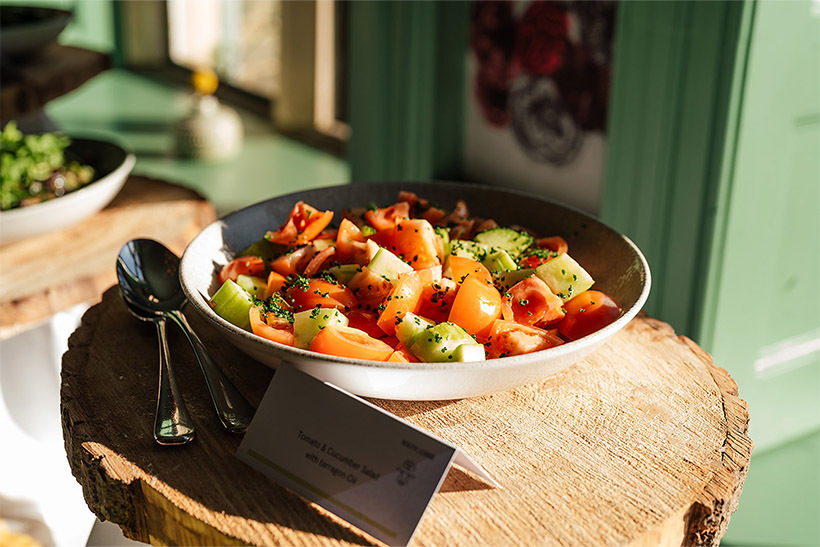
When there's important work lined up after lunch, plan the menu carefully. Fresh salads with grains and pulses, grilled fish or chicken with seasonal vegetables, and lighter hot dishes can all provide a satisfying meal without leaving delegates feeling overly full. Flexible portion sizes help too.
And if the venue is renowned for elevated dining experiences, why not save the more indulgent meal for the evening, when everyone can relax and enjoy it without having to return to a demanding workshop?
There's also a good argument for getting people moving after lunch. A 2023 review of eight clinical trials found that exercising shortly after eating, including walking, helped reduce the rise in blood sugar that follows a meal, compared with remaining inactive or exercising beforehand.
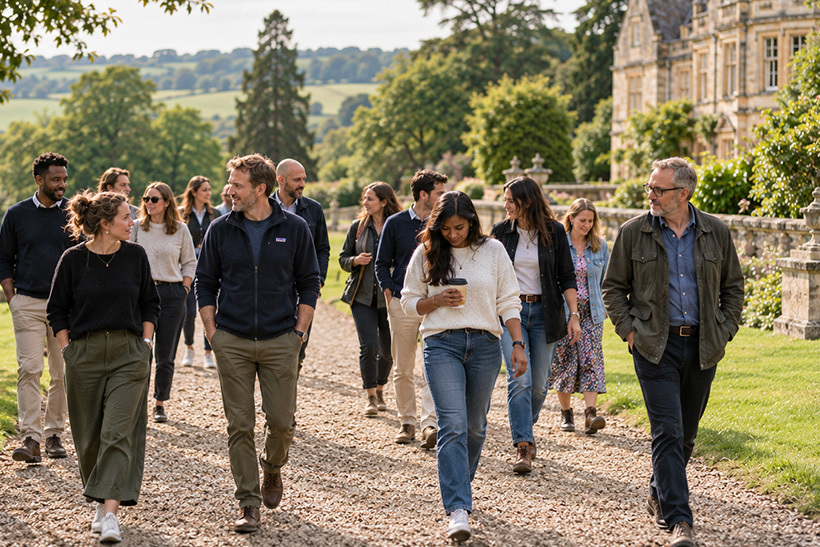
For corporate retreats held at country houses and estates, this presents a great opportunity to make use of the surroundings. Rather than heading straight back into the meeting room, try scheduling an optional 15–20-minute walk around the grounds. It gives people a change of scenery, a chance to chat informally and a welcome break from sitting down.
When it comes to the afternoon agenda itself, interactive workshops, smaller group discussions and activities can provide some variety after a morning of presentations.
Ultimately, a successful lunch break should leave people feeling refreshed and ready to get involved in the afternoon, rather than wishing they could head back to their bedrooms for a nap.
5. Hydration: An Easy Detail To Get Right
With coffee breaks, working lunches and evening drinks to organise, something as simple as keeping everyone hydrated can easily be overlooked.
Yet drinking enough water matters, particularly during a busy day of meetings and activities. A 2018 analysis of 33 studies involving 413 participants found that dehydration was associated with reduced cognitive performance, particularly in tasks involving attention and executive function, which includes skills used in planning and decision-making. The effects were more noticeable at greater levels of dehydration.
It's a simple thing to get right. Make sure fresh water is readily available in meeting rooms, ideally on tables rather than requiring delegates to leave the room. Water stations should also be accessible during refreshment breaks and outdoor activities, especially in warmer weather.
Not everyone wants to drink plain water all day, though. Sparkling water, fruit-infused water and caffeine-free alternatives can provide a little variety. Staying hydrated shouldn't require any effort on the part of your delegates.

6. Alcohol: When The Evening Affects The Morning
After a busy day of meetings, workshops and activities, the highlight of many corporate events is a good dinner, free-flowing wine and the chance to loosen up and relax with colleagues. The evening is often when people really get to know one another, away from the pressures of the working day.
But if there's another full day of meetings planned for tomorrow, it's worth considering how the evening's hospitality will affect everyone's performance.
The effects of alcohol are often misunderstood. Although it can make people feel sleepy, it doesn't necessarily help them sleep well. A 2025 review of 27 studies found that even relatively low levels of alcohol consumption disrupted REM sleep, the stage of sleep associated with dreaming and important functions such as memory and emotional processing. The disruption became more pronounced as alcohol consumption increased.
And it's not just sleep that's affected. A 2018 review involving 1,163 participants found that hangovers following heavy drinking were associated with poorer memory, slower reactions and reduced ability to maintain attention, even when blood alcohol levels had returned to almost zero.
Then there's the dreaded 'hangxiety'. A review of 22 studies involving more than 6,000 people found that hangovers were associated with increased feelings of anxiety, stress and low mood. Poor sleep can add to the problem, with separate research showing that sleep loss can increase anxiety the following day.
Imagine spending thousands of pounds bringing a leadership team together for a two-day strategy retreat, only for the most important discussions to take place the morning after a particularly lively evening. Some delegates might be feeling tired, anxious or self-conscious at precisely the moment they're expected to contribute ideas, challenge opinions and make important decisions.
If you're planning the evening's entertainment, think about how the night is structured. Scaling back the open bar may not be the most popular option, but late-night drinking could be counterproductive when there's important work planned for the following morning.
You can still create a memorable experience. Just consider offering appealing mocktails and alcohol-free or low-alcohol drinks, plus activities that give people other ways to socialise throughout the evening.
An after-dinner walk, informal games, a quiz or simply gathering around the fire can all provide opportunities for conversation without making drinking the main attraction. Keep these activities optional, allowing those who prefer an early night to head off without feeling they're missing something important.
It's also important to think ahead to the following morning's agenda. If the retreat involves difficult decisions, intensive workshops or presentations requiring everyone's full attention, protecting time for a good night's sleep is vital. None of this means being a fun-sponge. It just means readjusting how you measure the success of the evening – it's less about how much fun everyone had, and more about how rested they feel the next day.
Protecting sleep isn't just about what delegates drink in the evening. Sleeping arrangements matter too. At The Country Castle Company, we strongly recommend single-occupancy bedrooms for residential corporate retreats. Sharing a room with a colleague can mean interrupted sleep, different bedtimes, snoring or early alarms. Giving everyone their own bedroom provides privacy, independence and somewhere to properly switch off after a busy day. It's a small but important consideration when choosing a venue, particularly when there's another demanding day ahead.
7. Putting It All Together: A Better-Balanced Corporate Retreat
Getting the food, drink and schedule right doesn't require a complete rethink of the traditional corporate retreat. Often, it's the smaller details that make the biggest difference.
With the research we've explored in mind, here's an example of how a one-night residential retreat could be structured to help delegates stay engaged, enjoy their surroundings and get the most from their time together.
Day 1: Arrive, Collaborate And Unwind
- 9.30am – Arrival and refreshments. Welcome delegates with good-quality coffee, teas, water and a selection of fresh fruit and light snacks.
- 10.00am – Morning workshops. Schedule some of the more demanding discussions while everyone is fresh, with a proper refreshment break midway through.
- 12.30pm – Lunch. Offer a balanced selection of lighter dishes, with plenty of choice and flexible portion sizes. Save the more elaborate dining experience for the evening.
- 1.30pm – A change of scenery. Allow time for an optional walk around the grounds before returning to the afternoon programme, with an accessible indoor alternative if needed.
- 2.00pm – Collaborative sessions. Make the afternoon interactive, with smaller group discussions, brainstorming or practical activities.
- 3.30pm – Afternoon refreshments. Offer nutritious snacks alongside tea, coffee and decaffeinated alternatives.
- 4.30pm – Finish the formal programme. Give delegates some time to themselves before the evening begins.
- 7.00pm – Dinner and socialising. Enjoy the venue's hospitality, with excellent food, wine and appealing alcohol-free alternatives.
- After dinner – Optional activities. A relaxed quiz, games, conversation around the fire or simply an early night. Let everyone choose how they'd like to spend their evening.
Day 2: Refreshed And Ready To Contribute
- 7.30–9.00am – Breakfast. Allow plenty of time and offer a good selection of cooked and lighter breakfast options.
- 9.30am – Morning sessions. Bring everyone together for the important discussions, decisions and next steps.
- 11.00am – Refreshment break. An opportunity to recharge before the final working session.
- 12.30pm – Lunch and wrap-up. Finish with a relaxed lunch, giving everyone a chance to reflect on the retreat before heading home.
Of course, every event is different. Some will involve more intensive meetings, while others include outdoor activities, team-building challenges or a more relaxed programme. The important thing is to consider how the catering, activities and downtime work together.
Dietary requirements should also be discussed with the venue well in advance. Whether delegates have food allergies, follow a particular diet or simply prefer different options, everyone should be able to enjoy the catering.
Food For Thought
A carefully planned retreat is about more than choosing a beautiful venue and putting together an interesting agenda. What delegates eat, when they take breaks, how they spend their evenings and where they sleep all deserve attention.
Get those details right, and you give everyone a better opportunity to enjoy the experience, contribute meaningfully and get the most from their time together.
At The Country Castle Company, we help businesses find distinctive venues for corporate retreats, offsites and residential events across the UK. From excellent dining and comfortable individual bedrooms to beautiful grounds and flexible meeting spaces, we can help you find a setting that works for your team and your objectives.
Get in touch to start planning your next corporate retreat.